
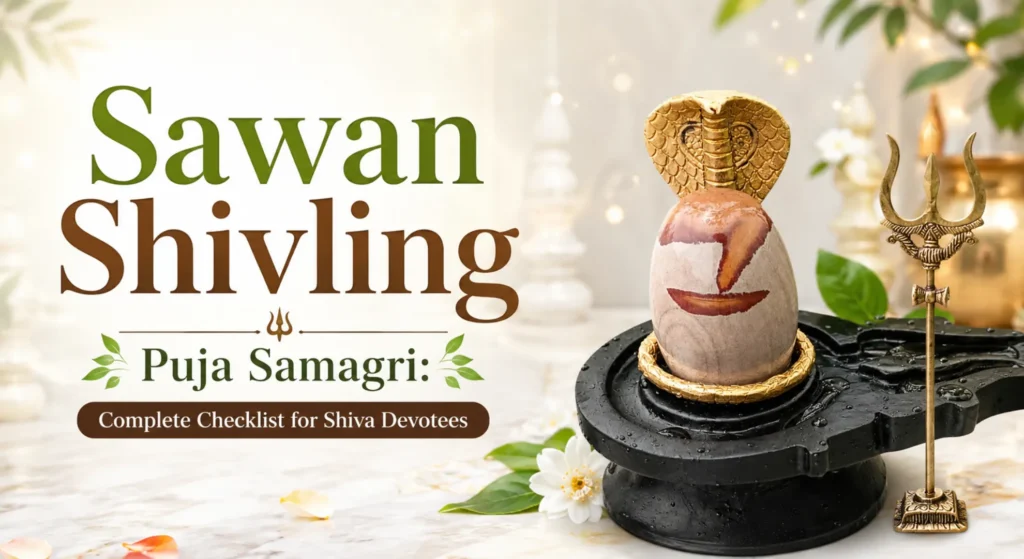
Sawan (Shravan Maas) is one of the holiest months in the Hindu calendar, dedicated entirely to the worship of Lord Shiva. During this sacred period, millions of devotees observe Somvar Vrat, perform Shivling Abhishek, chant “Om Namah Shivaya,” and offer prayers with unwavering faith. Whether you worship at a temple or perform daily rituals at home, preparing the right Sawan Shivling puja samagri helps you perform the puja with devotion and proper tradition.
Although Lord Shiva values sincere devotion above all else, using traditional puja items adds meaning to the worship experience. Every offering carries a symbolic message of purity, gratitude, surrender, and spiritual discipline.
If you are planning to perform daily Shivling Puja during Sawan, this complete checklist will help you prepare everything you need.
For authentic Narmadeshwar Shivlings for home worship, explore:
https://narmdeshwarshivling.com/shop
You may also find this related article helpful:
Preparing the required items before beginning the puja allows devotees to focus entirely on worship without interruptions.
A well-prepared puja also helps you:
Therefore, arranging your Sawan Shivling puja samagri beforehand makes the worship experience more organized and meaningful.
The following items are commonly used during Shiva worship throughout Shravan Maas.
The Shivling is the center of the entire worship.
Many devotees prefer a Narmadeshwar Shivling because it:
An authentic Shivling creates a meaningful foundation for your daily worship.
Water is the most important offering during Shivling Abhishek.
Offering water symbolizes:
Always use clean drinking water for Jal Abhishek.
Bilva Patra is considered one of Lord Shiva’s most beloved offerings.
Its three leaves traditionally symbolize:
Fresh Bilva leaves remain an essential part of every Sawan Shivling puja samagri collection.
Many devotees offer milk during Abhishek.
Milk symbolizes:
Although optional, it is widely used during Sawan worship.
Fresh flowers express love and respect toward Lord Shiva.
White flowers are commonly preferred because they represent:
Always use fresh flowers whenever possible.
Sandalwood paste is applied as a sacred offering after Abhishek.
It symbolizes:
Its pleasant fragrance also enhances the spiritual atmosphere.
Lighting incense creates a peaceful environment for worship.
It represents:
Use mild and natural fragrances whenever possible.
Lighting a diya before beginning the puja symbolizes:
A simple oil or ghee lamp is commonly used during Shiva worship.
Many devotees offer seasonal fruits as part of their prayers.
Fruit offerings symbolize:
After the puja, these fruits are often distributed as prasad.
Some devotees perform Panchamrit Abhishek using:
This traditional mixture symbolizes purity, abundance, and devotion.
Although optional, it is commonly used on Sawan Mondays and Mahashivratri.
Depending on family traditions, you may also keep:
These items help complete the worship setup but are not always compulsory.
Besides arranging your Sawan Shivling puja samagri, preparing the worship area is equally important.
Before beginning:
Keep the worship area neat and organized.
Place every item within easy reach.
Personal cleanliness reflects respect toward the ritual.
A peaceful atmosphere helps improve concentration.
These simple preparations help create a spiritually uplifting environment.
Once all puja items are ready, you can follow this simple routine.
Light the diya and incense.
Perform Jal Abhishek using clean water.
Offer milk if desired.
Place Bilva Patra on the Shivling.
Offer white flowers.
Apply sandalwood paste.
Chant “Om Namah Shivaya” or the Maha Mrityunjaya Mantra.
Offer fruits as prasad.
Sit quietly for meditation.
This simple routine is suitable for both beginners and experienced devotees.
Although the ritual is simple, devotees should avoid a few common mistakes.
These include:
Proper preparation helps devotees remain focused throughout the worship.
The purpose of collecting Sawan Shivling puja samagri is not to perform elaborate rituals but to express devotion with sincerity.
Even if every traditional item is not available, Lord Shiva is believed to accept worship offered with a pure heart. The most valuable offerings are faith, humility, discipline, and gratitude.
By preparing your puja materials thoughtfully and worshipping consistently throughout Shravan Maas, you create a meaningful spiritual routine that strengthens your connection with Mahadev and fills your home with peace and positive energy.
Essential items include a Shivling, clean water, Bilva Patra, milk, flowers, sandalwood paste, incense sticks, diya, fruits, and optional Panchamrit.
Many devotees prefer a Narmadeshwar Shivling because of its natural formation and traditional spiritual significance.
Bilva Patra is one of the most sacred offerings to Lord Shiva and is widely used during Sawan worship.
Yes. Offering clean water with sincere devotion is considered a complete and meaningful form of worship.
“Om Namah Shivaya” and the Maha Mrityunjaya Mantra are among the most commonly recited mantras.
Yes. Many devotees perform daily Shivling worship at home throughout Shravan Maas.
You can explore authentic options here:
https://narmdeshwarshivling.com/shop
No. Panchamrit is optional. Simple Jal Abhishek performed with faith and devotion is equally meaningful.


Discover the divine power of authentic Narmadeshwar Shivlings, crafted from the sacred Narmada River stone.
+91-9165667897
luckykewat932@gmail.com
Bakawan Madhya Pradesh
Copyright © All Right Reserved