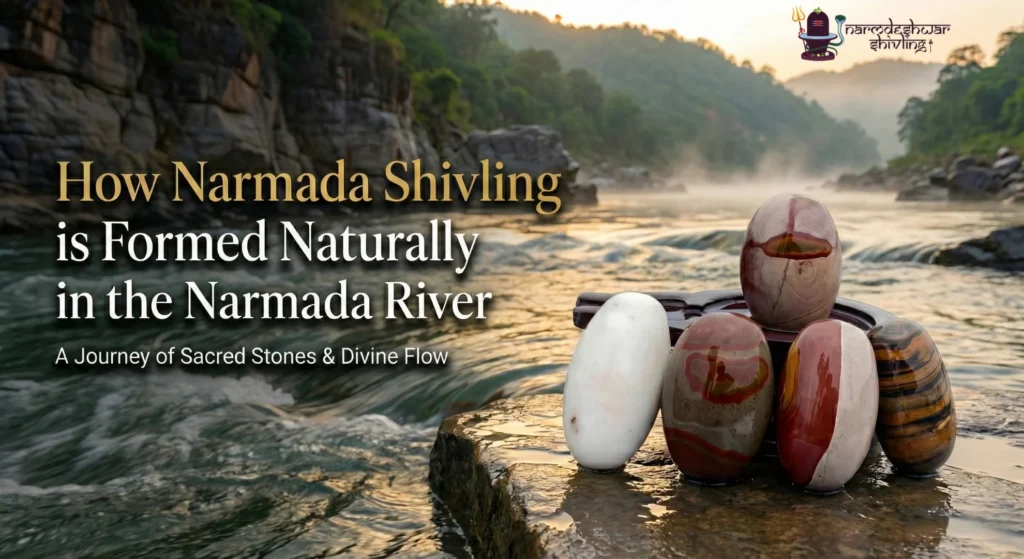
Many devotees feel curious about how Narmada Shivling is formed, especially after learning that these sacred stones are not carved or sculpted by human hands. Unlike traditional temple Shivlings shaped by artisans, Narmada Shivlings emerge naturally from the riverbed of the holy Narmada River. Because nature alone shapes them, devotees regard these Shivlings as spiritually pure and self-manifested.
The Narmada River flows across central India with immense geological and spiritual history. Over countless centuries, the river’s continuous movement transforms ordinary stones into sacred forms. This natural shaping process does not occur overnight. Instead, water, minerals, friction, and time gradually refine these stones into smooth, balanced, and elliptical shapes that resemble the traditional Shivling structure. As a result, devotees see them not merely as stones but as divine expressions of nature.
To fully understand how Narmada Shivling is formed, we must examine the geological forces working within the river system. The Narmada River flows through regions rich in basalt and other durable rock formations. These rocks break down over time and enter the river as smaller stones.
As the river flows, especially during monsoon seasons, strong currents push these stones downstream. Because the stones constantly roll, collide, and rotate against one another, friction gradually removes sharp edges. Over hundreds or even thousands of years, this repeated motion smoothens the stones and naturally shapes them into oval or cylindrical forms.
Furthermore, the river carries mineral-rich sediments that polish the surface of the stones. Therefore, many Narmadeshwar Shivlings display natural lines, multicolor grain patterns, and subtle markings. These features reflect the unique mineral composition of the riverbed rather than any artificial design.
Water pressure plays a significant role in shaping the Narmada Shivling. Unlike static stones, river stones remain in constant motion. During heavy rainfall or seasonal floods, the river’s speed increases dramatically. As a result, stones experience intensified friction and polishing.
Additionally, when stones rotate repeatedly in the same direction, they gradually adopt symmetrical forms. This symmetry explains why many Narmada Shivlings appear proportionate and balanced. The river essentially acts as a natural sculptor, using time and pressure as its tools.
Because this process happens organically, each Shivling carries a distinct identity. No two stones undergo identical pressure patterns, which is why every genuine Narmadeshwar Shivling appears unique.
Time remains one of the most important factors in explaining how Narmada Shivling is formed. While machines can polish stones within hours, nature requires centuries to create these sacred forms. Continuous erosion, mineral interaction, and movement slowly refine the stone’s structure.
Moreover, temperature variations between seasons influence stone density and surface texture. Over decades, these environmental changes strengthen the stone while smoothing its appearance. Therefore, the natural formation process represents patience, endurance, and gradual transformation.
Devotees often interpret this slow shaping as symbolic of spiritual growth. Just as the river slowly shapes the stone into a sacred form, consistent devotion gradually shapes the mind into a state of peace and clarity.
While geology explains the physical process, spirituality adds deeper meaning. Devotees believe that Lord Shiva eternally blesses the Narmada River. Therefore, when nature shapes stones into Shivling form, devotees interpret it as divine will rather than coincidence.
Traditional beliefs describe the Narmada River as spiritually self-purifying. As a result, stones formed within its waters carry sacred vibrations. Because no human carving interferes with the stone, devotees regard Narmadeshwar Shivlings as spiritually complete and naturally energized.
This harmony between natural formation and divine symbolism strengthens the faith of worshippers who seek authenticity in their spiritual practice.
Each Narmada Shivling features distinct patterns and shades. Some appear dark and glossy, while others show multicolored grains or subtle stripes. These variations occur because different minerals settle on the stone surface during the shaping process.
Additionally, the depth of the river section influences mineral absorption. Stones formed in deeper areas often develop darker finishes, while stones shaped in mineral-rich currents display more visible patterns. Therefore, every Narmadeshwar Shivling carries a unique combination of geological history and natural artistry.
If you wish to explore naturally formed premium river stones, you can view this collection:
https://narmdeshwarshivling.com/product/set-of-5-natural-narmadeshwar-shivlings-premium-assorted-river-stones/
Understanding how Narmada Shivling is formed helps devotees identify authenticity. Artificial Shivlings are carved using tools, resulting in precise but mechanically uniform shapes. While they may look polished, they lack the organic patterns created by natural river forces.
In contrast, Narmadeshwar Shivlings display subtle imperfections and natural textures that indicate genuine river formation. Because of this distinction, devotees often prefer natural Shivlings for home worship and spiritual practices.
To explore authentic options, visit:
https://narmdeshwarshivling.com/shop/
Interestingly, science and spirituality complement each other in explaining Narmada Shivling formation. Science describes erosion, mineral polishing, and hydrodynamic forces. Meanwhile, spirituality recognizes divine presence within these natural processes.
Therefore, the formation of Narmada Shivling represents harmony between natural law and sacred symbolism. Understanding both perspectives deepens appreciation for its origin and strengthens devotional connection.
The natural formation of the Narmada Shivling symbolizes purity and resilience. Unlike sculpted idols, these Shivlings require no human effort to define their shape. Devotees see this as evidence of divine manifestation through nature.
Moreover, many believe that keeping a naturally formed Shivling at home enhances peace, balance, and spiritual awareness. If you wish to understand correct placement after acquiring one, refer to this guide:
https://narmdeshwarshivling.com/which-direction-should-shivling-face-at-home-vastu-guidelines-explained/
Proper placement complements the spiritual energy already present within the naturally formed Shivling.
Natural erosion, continuous water flow, mineral polishing, and centuries of friction shape river stones into Shivling forms.
No. Genuine Narmadeshwar Shivlings form naturally without human carving.
Constant movement in flowing water naturally smoothens and polishes the stone surface over time.
No. Only stones naturally shaped into balanced elliptical or cylindrical forms are considered Shivlings.
Devotees believe nature shapes them under divine influence, making them spiritually complete.
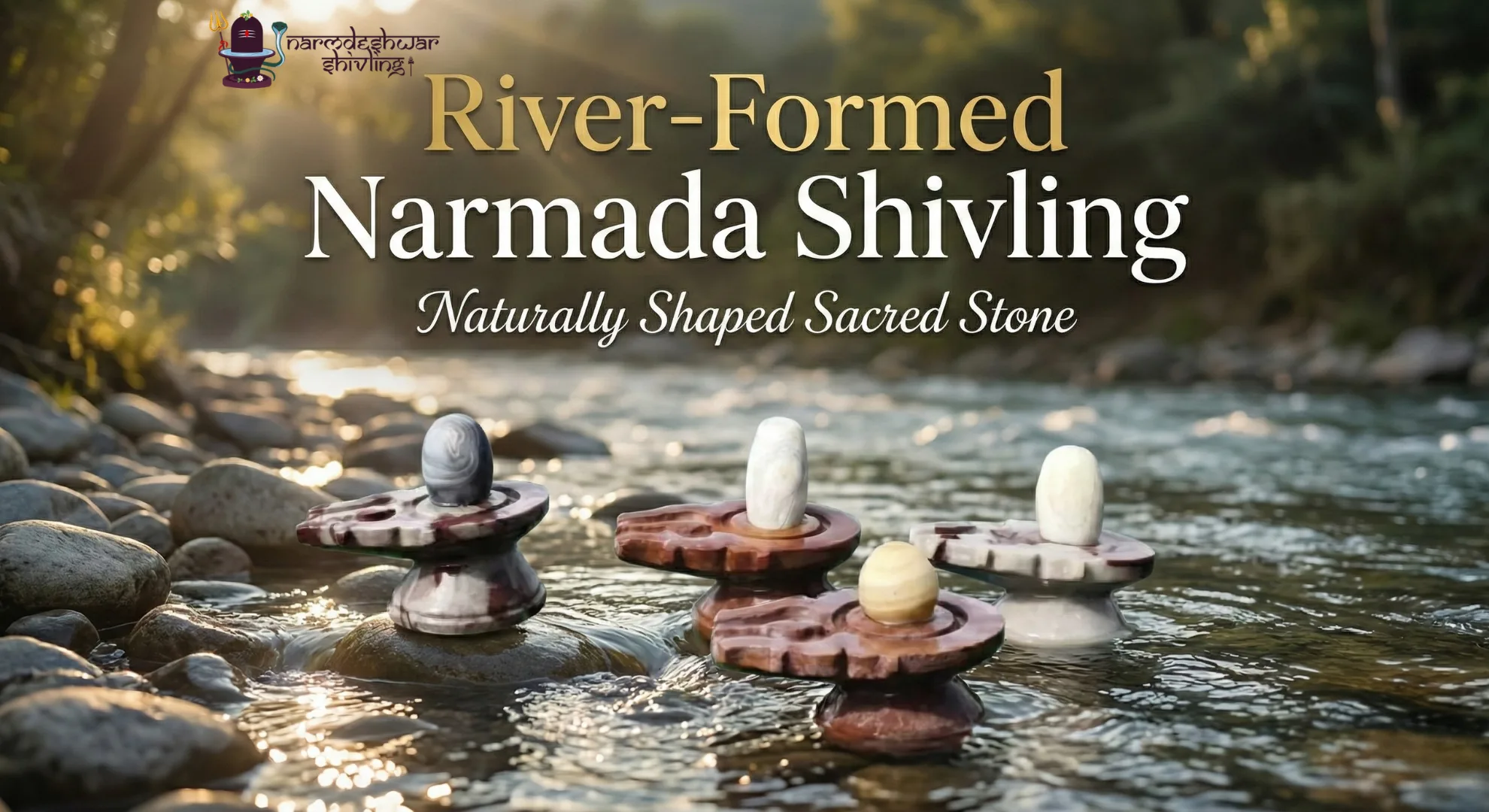



Discover the divine power of authentic Narmadeshwar Shivlings, crafted from the sacred Narmada River stone.
+91-9165667897
luckykewat932@gmail.com
Bakawan Madhya Pradesh
Copyright © All Right Reserved