

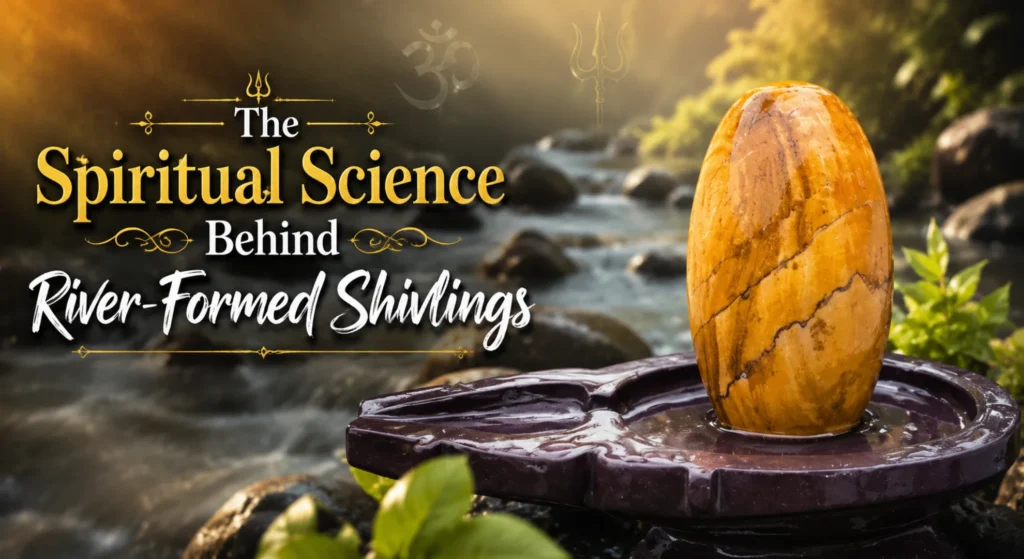
A river formed shivling represents one of the most fascinating intersections of spirituality, nature, and ancient wisdom. Unlike man-made Shivlings that artisans carve from stone or metal, nature creates a river formed Shivling through a gradual process that unfolds over centuries. Flowing water, mineral-rich currents, and continuous erosion work together to shape ordinary stones into forms that closely resemble the sacred symbol of Lord Shiva.
For thousands of years, saints, sages, and devotees have revered naturally formed Shivlings because they emerge without human intervention. Hindu tradition regards such manifestations as especially sacred because nature itself performs the role of creator. As a result, devotees often view a river formed Shivling as a direct expression of divine intelligence working through natural forces.
Many people approach the subject only from a religious perspective. However, a deeper exploration reveals a remarkable connection between geology, spirituality, meditation, and human consciousness. This relationship explains why naturally formed Shivlings continue to inspire devotion across generations and why many scholars describe their significance as a form of spiritual science.
A river formed shivling is a naturally shaped stone that develops within a river through the combined effects of flowing water, mineral interaction, pressure, and erosion. Instead of relying on tools, carving techniques, or mechanical polishing, nature gradually shapes these stones over an extremely long period.
As river currents move stones across the riverbed, constant friction smooths rough surfaces and rounds sharp edges. Over time, some stones develop an oval or cylindrical form that closely resembles the traditional Shivling shape worshipped in Hindu temples and homes. Because nature creates these sacred forms independently, devotees often classify them as self-manifested symbols of Lord Shiva.
Among all naturally occurring Shivlings, those originating from the sacred Narmada River hold special significance. Hindu tradition associates the Narmada River with Lord Shiva, and therefore devotees consider Narmada-origin Shivlings among the most spiritually revered forms available for worship.
Devotees value a river formed shivling because nature creates it without human design or intervention. This natural origin gives the Shivling a unique spiritual identity that differs from carved or manufactured forms.
In Hindu philosophy, naturally manifested sacred symbols often carry deeper significance because they arise directly from creation itself. Rather than reflecting human imagination, a river formed Shivling reflects the power and intelligence of natural processes. Consequently, devotees see these stones as reminders of the divine presence that operates throughout the universe.
Additionally, every naturally formed Shivling possesses its own distinct character. Differences in shape, texture, color, mineral markings, and surface patterns ensure that no two pieces are exactly alike. This uniqueness reinforces the belief that nature creates each Shivling individually, making every stone spiritually meaningful.
The formation of a river formed shivling begins deep within a river ecosystem. Rivers constantly carry stones, minerals, sediments, and organic materials across long distances. During this movement, stones repeatedly collide with one another and with the riverbed.
Over hundreds or even thousands of years, flowing water gradually removes rough surfaces and sharp edges. At the same time, mineral-rich currents influence the stone’s texture, density, and coloration. This combination of erosion and mineral interaction slowly transforms certain stones into smooth, balanced forms.
Eventually, nature produces stones that closely resemble the sacred Shivling shape. Unlike artificial manufacturing, this process unfolds naturally and patiently. Every curve, marking, and contour develops through continuous interaction with water and geological forces.
Because no human hand shapes the final form, devotees regard these stones as powerful examples of divine creation operating through nature.
Hindu spirituality often associates natural manifestation with divine will. Therefore, a river formed shivling symbolizes more than a naturally shaped stone. It represents the idea that creation itself expresses sacred intelligence.
The Shivling symbolizes the infinite, formless, and eternal nature of Lord Shiva. Since nature creates river formed Shivlings independently, devotees often interpret them as physical reminders of that eternal reality. Their existence demonstrates how divine principles can emerge through natural processes rather than through deliberate human effort.
Furthermore, the formation process itself carries a profound spiritual lesson. Just as flowing water gradually transforms a rough stone into a sacred form, spiritual practice gradually transforms the human mind. Patience, consistency, and devotion shape inner growth in much the same way that a river shapes stone over time.
Rivers occupy a special place in Hindu tradition because they symbolize life, purification, movement, and renewal. Sacred rivers do more than provide water; they serve as living symbols of divine grace and spiritual cleansing.
A river formed shivling remains immersed in this sacred environment throughout its formation. Continuous contact with flowing water connects the stone to the river’s symbolic and spiritual significance. Consequently, devotees believe that these Shivlings absorb and retain subtle spiritual vibrations from their surroundings.
While science explains the physical transformation of the stone, spiritual traditions emphasize the energetic relationship between sacred rivers and divine consciousness. Together, these perspectives help explain the enduring reverence surrounding naturally formed Shivlings.
When people refer to the spiritual science behind a river formed shivling, they usually describe the connection between spiritual practice and human experience. Although science cannot measure divine presence directly, it can examine how sacred rituals influence mental and emotional well-being.
For example, devotees often report:
Daily worship creates a structured environment that encourages mindfulness and focused attention. Chanting mantras, performing abhishek, and meditating before a sacred symbol help quiet mental distractions. As a result, practitioners often experience measurable psychological benefits alongside their spiritual practices.
Therefore, the spiritual science of a river formed Shivling may lie in its ability to support contemplation, discipline, and inner transformation.
Many devotees notice unique markings, mineral lines, color variations, and patterns on a river formed shivling. Rather than viewing these features as flaws, traditional spirituality treats them as signs of authenticity.
Nature rarely creates perfect symmetry. Instead, natural processes produce individuality and variation. Every mark tells part of the stone’s geological journey through the river. Consequently, these characteristics increase the Shivling’s uniqueness and reinforce its natural origin.
Spiritually, natural markings remind devotees that divine beauty does not depend on artificial perfection. Authenticity often carries greater value than uniform appearance. This perspective encourages acceptance, humility, and appreciation for the wisdom present in natural creation.
For more insights into sacred symbols and natural markings, read:
Meditation plays a central role in Shiva worship. The simple and balanced form of a river formed shivling provides an ideal focal point for concentration and contemplation.
During meditation, the mind often wanders between thoughts, emotions, and external distractions. A Shivling offers a stable visual anchor that helps practitioners redirect attention inward. Its smooth and uncomplicated shape encourages mental stillness rather than sensory stimulation.
Over time, regular meditation before a river formed Shivling can improve focus, emotional stability, and spiritual discipline. This benefit explains why many yogis and spiritual practitioners have preferred naturally formed Shivlings for centuries.
Modern technology allows manufacturers to create highly polished religious objects with precision and speed. Nevertheless, devotees continue to seek naturally formed Shivlings because of their authenticity and spiritual symbolism.
Every river formed shivling carries a story of natural evolution. The stone reflects centuries of geological activity, sacred geography, and spiritual tradition. Rather than representing mass production, it represents patience, transformation, and the enduring relationship between humanity and nature.
As a result, river formed Shivlings continue to inspire devotion in contemporary times while preserving a connection to ancient spiritual wisdom.
When selecting a river formed shivling, authenticity matters. Genuine pieces usually display:
Authentic Shivlings rarely look identical because nature creates each one differently. Therefore, devotees should appreciate natural uniqueness rather than seek machine-made perfection.
Explore authentic collections here:
A river formed shivling offers valuable lessons that extend beyond ritual worship. First, it teaches patience because nature requires centuries to create it. Second, it teaches humility because natural forces shape it without human control. Third, it teaches faith because it demonstrates how transformation unfolds gradually through consistent effort.
Most importantly, the stone reminds devotees that spiritual growth follows the same principle. Just as flowing water transforms an ordinary stone into a sacred form, devotion, discipline, and self-awareness gradually transform human consciousness.
A river formed Shivling is a naturally shaped stone created through centuries of water flow, mineral interaction, and erosion within a river.
Devotees consider them sacred because nature forms them without human intervention, making them symbols of divine creation.
No. Only naturally formed stones that resemble the traditional Shivling shape receive recognition and worship as Shivlings.
Mineral deposits, geological activity, and centuries of river interaction create natural markings and patterns.
Yes. Many devotees keep naturally formed Shivlings at home for daily worship, meditation, and spiritual practice.



Discover the divine power of authentic Narmadeshwar Shivlings, crafted from the sacred Narmada River stone.
+91-9165667897
luckykewat932@gmail.com
Bakawan Madhya Pradesh
Copyright © All Right Reserved